
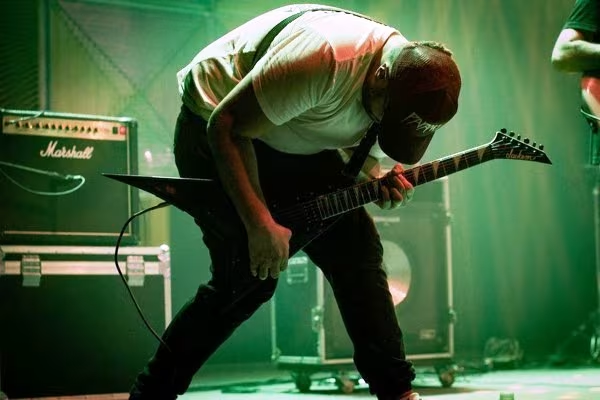

A bloke in his early thirties walks into a music shop in suburban Sydney. He picks up a guitar and runs his thumb across the strings for the first time. His fingers are clumsy, his posture unsure. And still, something clicks, a resonance that sweeps away years of “you should’ve started as a kid.”
Australia has produced guitarists who left a mark on world music, from stadium rock bands to more intimate jazz outfits. It’s easy to assume they all grabbed a six-string before they turned ten. The reality is more mixed: plenty of remarkable players didn’t find the instrument until adulthood, with life experience that gives every note more weight. A good teacher can turn years of fumbling into a few months of progress. Here are ten of them.
The late-start advantage in Australian guitar culture
Australian music culture has always put sincerity ahead of credentials. Pub rock, outback blues, the DIY indie scene: none of them ever asked for a conservatoire. They asked for guts, feel and something real to say. That leaves the door open for anyone who picks up a guitar at twenty-five, thirty or older.
Starting late brings underrated advantages. An adult beginner already has emotional depth to draw on, a clear taste for the sound they want, and the discipline that comes with paying rent and meeting deadlines. The teenager noodling in their bedroom rarely has that focus.
Working with a guitar tutor noticeably speeds up progress for adult learners. When you can already tell a Hendrix tone from Tommy Emmanuel-style fingerpicking, a good teacher tailors the path instead of drilling you through nursery rhymes. The Australian spirit of “having a go,” whenever you start, makes this one of the best places to begin late and still make it.
Ten Australian guitarists who picked up the instrument later than you’d think
These ten stories share one thing: the guitar came after childhood, sometimes much later. Rock, blues, jazz, folk, indie, the range reflects Australia’s musical landscape. And in each case, guidance, formal or informal, helped close the gap.
- Dave Hole became one of Australia’s fiercest blues slide players. Out of Perth, his self-produced demo landed on the desk of an American label, which opened up international touring. His open-tuning work shows that patient technical graft pays off at any age.
- Tex Perkins was a singer for years before he committed to guitar. Once he did, his writing with The Cruel Sea and as a solo artist gained grit and intimacy, proof you can add a string to your bow well after the start.
- Adalita Srsen grew up surrounded by music but didn’t write on guitar until later. Her work with Magic Dirt and then solo shows that punk energy paired with a late pick-up produces something visceral. She learned a lot by ear.
- Phil Jamieson, of Grinspoon, focused on writing on guitar as an adult rather than as a teenager. The band’s platinum records and his tireless presence on the Australian festival circuit show that late technical development doesn’t cap success.
- Ash Grunwald picked up the guitar around his twenties, late for someone who’d build a whole career around blues-rock. His loop-pedal skills and high-energy shows made him a festival regular.
- Jeff Lang came to slide and acoustic guitar seriously after exploring other instruments. His many ARIA nominations and international roots-and-blues career say everything about what patience mixed with passion can do.
- Liz Stringer shifted to guitar-driven writing in her mid-twenties. Her critically praised folk and indie albums earned a loyal following in Australia and Europe. Her approach rewards the emotional maturity that adult experience brings.
- Mia Dyson got serious about guitar technique in her early twenties. Her blend of roots, rock and americana found an international audience, with North American tours and bills shared with far more established artists.
- Dan Sultan came to guitar later than most of his peers, channelling his energy into singing first. Once he committed to the instrument, his writing deepened across rock, soul and Indigenous storytelling.
- Courtney Barnett, now one of Australia’s most internationally recognised indie artists, didn’t make guitar her main instrument until her late teens. Her deliberately raw style proves that technical perfection matters less than voice and feel.

How a teacher accelerates an adult’s progress
Teaching yourself works up to a point. Beyond it, bad habits set in: a badly placed thumb, laboured chord changes, tension in the fretting hand that leads to fatigue or even injury. An adult doesn’t have years to spare unlearning those mistakes by trial and error.
A good teacher brings four things self-study doesn’t:
- Personalised feedback on technique, in real time
- A structured program built around your musical taste
- A regularity that keeps practice going from one week to the next
- The spotting of specific weaknesses you can’t hear yourself
Plenty of adult learners describe how guidance compressed years of messy practice into fast, targeted progress. Online resources, apps and YouTube tutorials have real value, but they can’t watch your hands, correct your posture or rethink a lesson mid-flow because you’ve hit an unexpected wall.
Common obstacles for late starters, and how to get past them
Impostor syndrome hits adult beginners hard. You walk into a music shop and see fourteen-year-olds shredding. In a group class, you get self-conscious about your stiff fingers. That inner voice whispers the window closed long ago.
Practical constraints add to the psychological load. Work eats into practice time. Family commitments leave gaps of several days between sessions. Older hands and wrists stiffen faster, and recovery takes longer than it did at eighteen.
A few concrete levers help you stick with it. Practise in focused twenty-minute blocks rather than marathon sessions. Set goals every fortnight instead of vague resolutions. Choose a teacher who specialises in adults and understands the pace of adult learning. And remember that several guitarists on this list faced the same doubts before their breakthrough.
Training strategies that work for adult guitarists
Short, focused sessions beat long scattered ones every time. Twenty minutes of deliberate practice on a weak spot (barre chords, fingerpicking patterns, rhythmic precision) builds more skill than two hours rehashing songs you’ve already nailed.
Warm up properly. Older fingers need gentle stretches before tackling demanding passages. Skip that step and you invite tension and discouragement. A short two-minute routine of finger rolls and wrist circles makes a measurable difference.
| Goal | Suggested timeframe |
| Learn a full song | Two weeks |
| Play a clean barre chord | Four weeks |
| Play in time with a metronome | Six weeks |
| Perform at an open mic | Three to four months |
A teacher builds a training plan that fits your life, adjusting the intensity around busy weeks or travel. That flexibility keeps momentum going when everyday demands get in the way.

How to choose the right teacher as an adult beginner in Australia
The right teacher shares your enthusiasm for a genre, has real experience with adults, and offers flexible hours. A classical guitar specialist won’t suit someone chasing blues licks, however qualified on paper.
In-person and online teaching both work well across Australia. Regional learners gain enormously from video lessons, while city dwellers sometimes prefer the live correction that comes from sharing a room. Check references, read reviews from other adult students in particular, and book a trial lesson before committing to a term.
Rapport matters more than the CV. An adult learner needs to feel respected, not talked down to. If the trial feels condescending or too rigid, move on. The best teachers treat you as a partner, not a child reciting scales.
Australia’s music scene always has room for late starters
Open mics run in almost every suburb of the Australian capitals. Community jam sessions pop up in regional towns, from Ballarat to Cairns. Local gig circuits welcome new voices, and nobody asks for your birth certificate at the door.
The ten guitarists here make a useful point: passion, paired with the right teacher, delivers extraordinary results at any age. Find your neighbourhood’s next open mic, put your name down, and play.




