
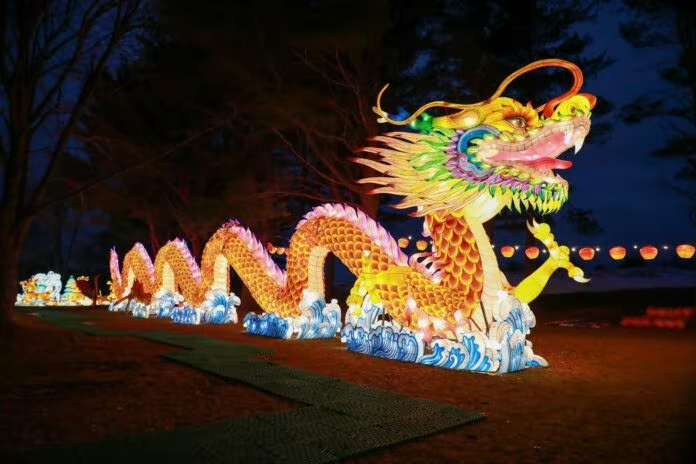

Seasonal light festivals have developed far beyond traditional holiday decorations. For parks, zoos, resorts, botanical gardens and other visitor attractions, a well-planned light festival can become a ticketed nighttime experience that attracts new audiences, extends operating hours and generates additional seasonal revenue.
However, installing a collection of illuminated displays does not automatically create a successful event. Commercial performance depends on how effectively the experience, visitor capacity, operating costs, marketing strategy and revenue model work together.
The strongest projects begin with a business plan—not a product catalogue.
Define the Commercial Objective Before Designing the Event
Every venue should first decide what the light festival is expected to achieve.
Possible objectives include:
- Generating ticket revenue during a quieter season
- Extending the venue into evening operating hours
- Increasing food, beverage and retail sales
- Attracting families, tourists or corporate groups
- Creating a recurring annual event
- Improving awareness of the venue
- Encouraging visitors to return outside the normal season
These objectives influence almost every later decision, including the event theme, route length, operating dates, ticket price, visitor capacity and marketing budget.
For example, a zoo may want to increase attendance during winter without disturbing animals or daytime operations. A resort may use a light festival to increase overnight stays and restaurant bookings. A municipal park may prioritize community participation, tourism and sponsorship revenue.
The design should therefore be developed around the venue’s commercial goals rather than treating the event as a temporary decorative installation.
Build a Realistic Attendance and Revenue Model
Before committing to a major installation, operators should estimate how many visitors the venue can realistically attract and accommodate.
A basic financial model should include:
- Number of operating nights
- Expected attendance on weekdays and weekends
- Maximum visitor capacity per time slot
- Average net ticket price
- Discounts and complimentary admissions
- Estimated food, beverage and merchandise spending
- Sponsorship or corporate booking revenue
- Marketing cost per ticket sold
- Staffing, electricity, maintenance and security costs
A useful calculation is:
Ticket revenue = Paid admissions × Average net ticket price
Operators should also calculate the contribution generated by each visitor after variable operating costs. This helps determine the approximate attendance required to reach the break-even point.
Attendance projections should include conservative, expected and high-demand scenarios. Weather disruptions, competing events and changes in consumer spending can all affect performance, so relying on a single optimistic forecast creates unnecessary risk.
Venues beginning this process can use a structured guide to planning a commercially viable light festival before finalizing the creative concept or purchasing displays.
Evaluate Whether the Venue Can Support the Event
An attractive location is not always an operationally suitable location. A feasibility assessment should consider the complete visitor journey and the practical requirements of running the event at night.
Important questions include:
- Is the venue easy to reach after dark?
- Is there sufficient parking or public transport access?
- Can visitors enter and leave without crossing installation areas?
- Are the pathways accessible for families, older visitors and wheelchair users?
- Is adequate electrical infrastructure available?
- Can emergency vehicles access the site?
- Are there residential areas that may be affected by light, music or traffic?
- Which sections are vulnerable to wind, flooding or severe weather?
- Can equipment be stored securely outside operating hours?
The assessment should also identify bottlenecks around entrances, ticket scanning points, food areas, toilets and popular photo locations.
Solving these issues during the planning stage is considerably less expensive than redesigning the event after installation.
Design the Festival Around Visitor Flow
A commercially successful light festival needs more than impressive individual displays. It requires a carefully paced experience that encourages visitors to continue exploring.
The route should normally include:
- A highly visible entrance landmark
- A clear beginning to the visitor journey
- Several themed zones with different visual identities
- Walk-through or interactive installations
- Large-scale focal displays
- Family-friendly photo opportunities
- Rest areas and food or beverage locations
- A memorable finale near the exit
Large displays should be positioned where visitors have enough space to stop and take photographs without obstructing the route. Interactive installations can be distributed throughout the experience to prevent one area from becoming excessively crowded.
The route should also support commercial activity. Food outlets, retail points and sponsored installations are most effective when they are integrated naturally into the visitor journey rather than placed in isolated corners.
A coherent experience gives visitors a reason to stay longer, share photographs and recommend the event to others. Randomly distributing illuminated objects across a site rarely produces the same result.
Treat Photo Opportunities as Part of the Marketing Strategy
Visitor-generated content can become one of the most valuable promotional assets for a seasonal event.
Walk-through tunnels, illuminated arches, giant animals, themed entrance structures and interactive displays can create recognizable photo locations. When these installations are easy to photograph and visually connected to the event identity, visitors effectively help promote the festival through their own social channels.
Photo locations should be considered during the original route design. Operators should evaluate viewing angles, background clutter, lighting on visitors’ faces, queue space and whether branding can be included without overwhelming the scene.
The aim is not simply to create something large. It is to create a visual moment that visitors immediately want to capture and share.
Develop More Than One Revenue Stream
Ticket sales may be the primary source of income, but they should not be the only one.
Additional revenue opportunities can include:
- Premium or priority-entry tickets
- Family and group packages
- Corporate evenings and private bookings
- Food and beverage concessions
- Seasonal merchandise
- Professional photography services
- Brand sponsorships
- Themed retail pop-ups
- Parking fees
- Hotel or resort packages
- Annual memberships linked to event access
Timed ticketing can help distribute arrivals throughout the evening and reduce congestion. Pricing can also vary according to weekday, weekend and peak holiday demand.
Each additional revenue stream must be balanced against the visitor experience. Excessive selling can make the festival feel commercial and fragmented, while carefully integrated services can improve convenience and increase per-visitor spending.
Budget for the Entire Project Lifecycle
A light festival budget should cover much more than the purchase price of illuminated displays.
The complete cost may include:
- Creative planning and visual design
- Structural and electrical engineering
- Custom manufacturing
- Factory assembly and testing
- Packaging and international transportation
- Customs clearance and local delivery
- Site preparation
- Installation equipment and labor
- Electrical distribution
- Permits, inspections and insurance
- Marketing and ticketing systems
- Security and visitor services
- Maintenance staff and spare components
- Dismantling, storage and refurbishment
A lower initial quotation can become more expensive if it excludes installation support, replacement components, documentation or suitable packaging.
Operators should compare suppliers on the total delivered and operational cost, not only the manufacturing price.
Select Displays That Can Be Reused and Refreshed
A seasonal light festival becomes more financially attractive when major assets can be reused across multiple years.
Commercial installations can be designed with modular frames, replaceable lighting components and detachable decorative surfaces. This can reduce transportation and storage requirements while making future maintenance easier.
However, repeating exactly the same visitor experience every year may weaken demand. A stronger strategy is to retain selected signature installations while refreshing part of the route with new themes, interactive features or seasonal stories.
This approach protects the original investment while still giving previous visitors a reason to return.
Operators should discuss future reuse before production begins. Frame construction, connection systems, packaging and installation documentation all affect whether the displays can be efficiently reassembled in later seasons.
Manage Safety, Weather and Operational Risk
Outdoor light festivals operate at night, often during periods of cold, rain, wind or snow. Safety and reliability must therefore be included in both the design and the budget.
The project team should review:
- Structural stability and anchoring
- Wind exposure
- Outdoor electrical protection
- Cable routing and trip hazards
- Emergency exits
- Fire access
- Pathway lighting
- Crowd capacity
- Accessibility
- Daily inspection procedures
- Weather-related closure policies
- Availability of spare electrical components
Commercial displays should be suitable for the expected outdoor conditions and supported by clear installation instructions. For large or complex projects, factory pre-installation can help identify connection, lighting and assembly issues before the equipment reaches the venue.
The operator should also define who is responsible for daily inspections, technical faults, cleaning, crowd management and emergency decisions throughout the event.
Choose a Project Partner, Not Just a Product Supplier
A large light festival usually requires coordination between the venue, event operator, creative team, manufacturer, logistics providers, installers and local authorities.
When evaluating a manufacturer or project partner, operators should ask whether the company can provide:
- Custom concept development
- Site-specific layout planning
- Structural and electrical documentation
- Commercial-grade outdoor materials
- Modular production
- Factory pre-installation
- Lighting and connection testing
- Export packaging
- Global transportation coordination
- Remote or onsite installation guidance
- Spare parts and maintenance support
A supplier that only delivers individual products may leave the operator responsible for solving route design, installation and technical compatibility problems independently.
For complex attractions, integrated project support can reduce coordination risk and help ensure that the final installation reflects the approved design.
Measure Performance and Improve the Next Season
The business plan should define how the event’s performance will be measured.
Useful indicators include:
- Total paid attendance
- Ticket revenue
- Average revenue per visitor
- Visitor acquisition cost
- Ticket sales by channel
- Weekday and weekend occupancy
- Visitor dwell time
- Food and retail spending
- Technical downtime
- Weather-related cancellations
- Customer satisfaction
- Social media mentions and shared content
- Percentage of first-time visitors
- Intention to return
Operators should review the results immediately after the event while operational information is still available. Visitor feedback, ticketing data and onsite observations can reveal which displays attracted the most attention, where congestion occurred and which revenue opportunities performed well.
These findings provide a stronger foundation for the following season.
Conclusion
A seasonal light festival can become a valuable commercial asset for a visitor attraction, but profitability depends on disciplined planning.
The venue must connect creative design with attendance forecasts, visitor flow, ticket pricing, operational capacity, safety and long-term asset use. It should also plan for multiple revenue sources and establish clear performance indicators before opening night.
When these elements are developed as one coordinated project, a light festival can do more than brighten a venue. It can create a repeatable nighttime attraction, strengthen the destination’s identity and generate new reasons for visitors to return year after year.




