
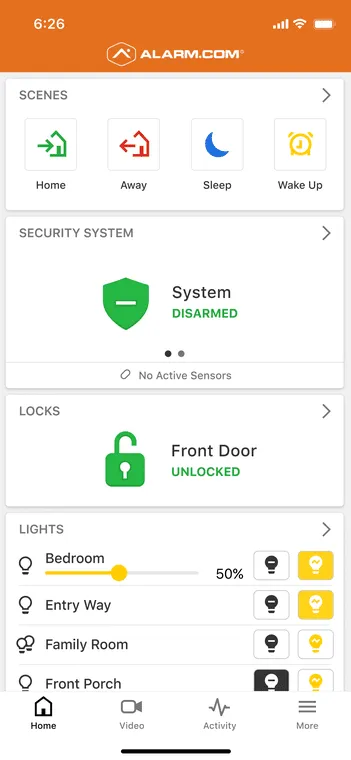

Australians are enthusiastic adopters of home technology, yet our approach to home security still tends to be piecemeal: a camera from one retailer, a smart doorbell from another, and an old alarm panel from the previous owner blinking in the hallway. Meanwhile, in parts of the United States, the home-security market has matured into something quite different, fully integrated systems, professionally designed, with flexible monitoring that does not chain the homeowner to a five-year contract. Whether you live in Melbourne, the Gold Coast, or a farmhouse outside Bendigo, there is plenty worth borrowing from how the best overseas operators now do things.
Integration Beats Accumulation
The first lesson is philosophical. A pile of clever devices is not a security system. When your cameras, locks, alarm sensors, garage door, lighting, and thermostat all speak to one another through a single platform, the whole becomes far more useful than the parts. Arm the system as you leave and the doors confirm they are locked, the lights adopt an away routine, and the cooling winds back. A sensor trip at 2 a.m. does not just ping your phone; it turns on the right lights, starts the right cameras recording, and, with professional monitoring, puts a trained operator on the case while you are still finding your glasses.
Fragmented setups fail at exactly the wrong moment. Four apps, four logins, and four notification streams mean that when something genuinely happens, you are scrolling instead of acting.
The Death of the Long Contract
The second lesson is commercial, and it is good news for consumers everywhere. For decades, the standard security deal in most markets, Australia included, was a long monitoring contract with steep exit fees. The subsidised free equipment was recovered through years of inflated monthly charges, and cancelling early could cost the balance of the entire term.
Competitive American markets have been dismantling that model. In Texas, to take one well-documented example, family-run firms competing in the san antonio home security market now advertise professional installation with no-contract monitoring: customers pay month to month and can walk away whenever they like. The company keeps your business by being good at its job rather than by holding your signature hostage. It is a useful benchmark when evaluating providers here. If a company insists on a three-year commitment, ask what, exactly, the lock-in is compensating for.
Professional Design Is Not a Luxury
The third lesson concerns installation. DIY kits have their place, particularly in small apartments, but detached homes, larger blocks, and anything with outbuildings reward professional design. An experienced installer knows that a camera facing west into the afternoon sun is nearly useless, that brick veneer and double-brick walls treat wireless signals very differently, and that the side gate, not the front door, is the entry point that actually matters on many suburban blocks.
Good installers begin with questions about how you live. Who needs access, and when? Do you travel? Is there a shed, a pool gate, a granny flat? The answers determine sensor placement, camera coverage, and access schedules far better than any off-the-shelf bundle. The overseas firms with the strongest reputations all share this consultative habit, and the best Australian outfits do too. It is a reliable filter when getting quotes.
Features Worth Asking For
A few capabilities have moved from novelty to must-have. Person detection, so alerts fire for humans rather than possums and passing headlights. Individual entry codes for family, cleaners, and tradies, each logged and revocable, with schedules attached. Remote lock control for the inevitable did-I-lock-it moment on the way to the airport. Water-leak sensors near the hot-water system, which quietly prevent more damage than burglars ever cause. And environmental monitoring that flags a failing air-conditioner before a heatwave turns the house into a kiln.
None of this is exotic anymore. The equipment is affordable and reliable; the differentiator is whether it has been assembled into a coherent system with sensible automations.
Questions That Sort the Good from the Ordinary
Wherever you are shopping, a short interrogation reveals a lot. Ask whether the monitoring agreement has a minimum term and what cancelling costs. Ask who owns the equipment and whether another company could take the system over later, proprietary gear that only works with one provider is a subtle form of lock-in. Ask who actually attends your home: employees or subcontractors. Ask about response times when a component fails. And read recent local reviews with attention to what happens after installation, because service, not sales, is where security companies earn their keep.
The Takeaway for Australian Homes
Home security worldwide is converging on a consumer-friendly formula: integrated systems, professional design, transparent month-to-month monitoring, and technology that stays quiet until it matters. The markets that got there first simply had more competition forcing the issue. Australian homeowners who insist on the same standards, and take their business to the firms that meet them, will find the local industry increasingly willing to oblige. Your house should watch over itself; you should barely have to think about it. That, in any hemisphere, is the point.


