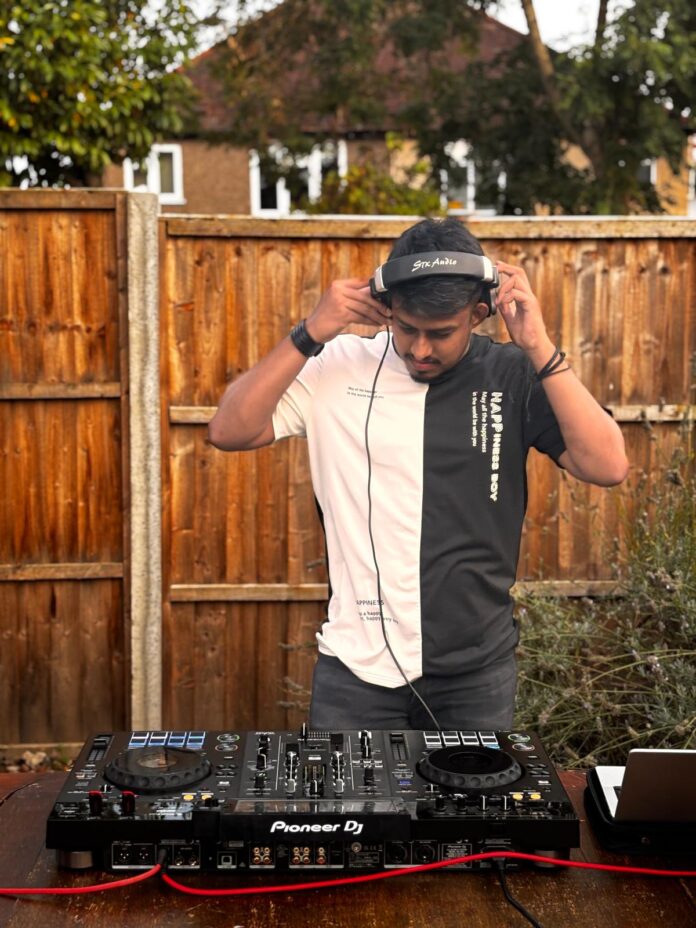

Blending Hindi and English, India and the UK, and hip-hop with electronic energy, Epic Sensation continues to shape a cross-cultural sound rooted in movement, confidence, and global perspective. His latest single, I’m Great, transforms an unfinished 2022 instrumental into a bold statement of self-belief, reimagined through collaboration and lived experience.
Written between continents and refined during his time studying MA Advanced Music Technology in London, the track reflects both artistic evolution and personal transition, turning uncertainty into motivation. We caught up with Epic Sensation to discuss identity across languages, rebuilding old ideas, and why confidence sometimes begins as self-talk before it becomes a declaration.

When it comes to language, Hindi keeps me connected to home. It’s the language in which I naturally express emotions, memories, and personal experiences. English, on the other hand, connects me to the global music scene and the wider audience I’ve been exposed to since moving to the UK. Rather than choosing one over the other, I see them as two parts of the same journey. Music has never felt limited by language to me. Whether it’s Hindi or English, the goal is always the same: to communicate a feeling, tell a story, and connect with people. If my music can act as a bridge between cultures, then that’s something I’m really proud of.
Interestingly, I didn’t find the cultural side as challenging as people might expect. One thing I love about London’s music scene is that diversity is celebrated. Performing and creating music in Hindi didn’t feel like a barrier; if anything, it became something that made me stand out. People were curious about the language, the culture, and the stories behind the music. That gave me confidence to embrace my identity rather than change it. The biggest challenge was probably adapting to the academic and technical side of the course. After being away from education for several years, suddenly being back in a research-driven master’s programme took some adjustment. At the same time, it was incredibly exciting. I had access to world-class studios, immersive audio environments, large-format mixing consoles, and technologies that I’d only read about before.
Looking back, the experience didn’t pull me between two different musical worlds. Instead, it helped me bring them together. It allowed me to combine the artistic foundation I built in India with the technical knowledge and global perspective I gained in the UK, and that’s had a huge influence on the sound I’m creating today.
Fast forward to my time at the University of West London, and Basement Studio 4 with Rithvik. We were going through a selection of beats and ideas, listening to different sounds and discussing potential collaborations. As soon as this instrumental came on, something clicked. Rithvik immediately connected with the energy, the vibe of the track. What started as an old unfinished beat suddenly felt fresh again. We both saw potential in it and decided to work on it. In a way, the song found its right moment and the right collaborators.
I think that’s something a lot of producers can relate to. Sometimes a track sits quietly for years, and then one conversation, one session, or one collaboration brings it back to life. That’s exactly what happened with “I’m Great.”
We ended up talking about life, personal growth, and the journey that had brought both of us to that studio. For me, moving from India to the UK was a huge step. Everything happened very quickly. I received my visa at the beginning of January 2023 and by the end of the month I had left home and moved to a completely different country. Looking back, I didn’t really have time to process everything that was happening because I was focused on adapting, learning, and making the most of the opportunity. That naturally led us into a conversation about confidence, self-belief, and manifestation. We spoke about how believing in yourself doesn’t have to come from ego or arrogance. Sometimes it’s simply about reminding yourself that you’re capable, that you’re growing, and that you don’t need validation from other people to know your worth.
Interestingly, the title “I’m Great” came quite late in the process. I already had part of a verse written from an earlier version of the track, and once Rithvik wrote and recorded his verse, we started looking for a hook that captured the energy of the song. As we kept listening back to the session, we realised that the message we’d been discussing all day was right there in front of us: “I don’t need anybody to tell me that I’m great.” That became the heart of the track. It’s not about saying you’re better than anyone else. It’s about trusting yourself, backing your own journey, and recognising your own progress even when nobody else is applauding yet.
In the studio, it’s a different process. You’re making creative decisions in advance. You have to understand the emotion and intention of the song and then deliver it in a way that serves the message. If a song is reflective, the performance has to reflect that. If it’s energetic and uplifting, the delivery has to match that energy. With “I’m Great,” the energy was already there from the beginning. The song came out of conversations about self-belief, manifestation, and trusting yourself without needing validation from other people. So when people see me perform, I think they connect with that confidence and authenticity before they even hear the recorded version.
For me, confidence isn’t about saying you’re better than everyone else. It’s about recognising your own progress and backing yourself when things are uncertain. Sometimes the most important validation doesn’t come from other people, it comes from yourself. That’s really the message at the heart of “I’m Great,” both on stage and in the studio.
At the same time, I saw how difficult that transition could be for many people. During my time at university, I met students from different countries who struggled with homesickness, isolation, and adapting to a new environment. Some of them even decided to leave and return home. Seeing that firsthand made me realise how important mindset can be when you’re building a new life in a new place. So when I say “I’m Great” in the song, it’s not really about telling other people how great I am. It’s me reminding myself to keep going. It’s a way of saying, “You’re doing okay. Keep making moves. Keep believing in yourself.” Sometimes the person who needs that message the most is YOU.
There’s also another layer to the story that I love. The beat was originally made in India, the song was recorded in the United Kingdom, and it was released through a label in Canada. What started as a simple idea ended up connecting people from three different parts of the world through one piece of music. When I think about that, it gives me chills. It’s a reminder that music has no borders. At the end of the day, it was just a few people connecting through creativity, belief, and a shared passion for music. That’s what “I’m Great” means to me. It’s a declaration, a motivation, and a conversation with myself all at the same time. And hopefully, when people listen to it, they find their own meaning in it too.