
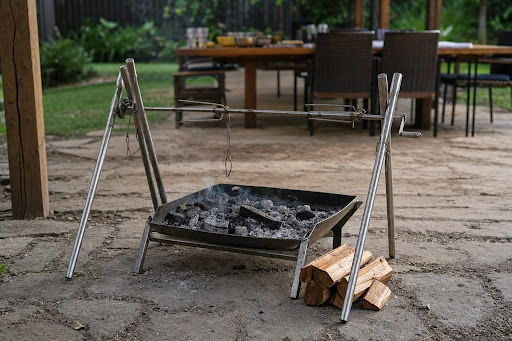

A slow-turning roast can make outdoor entertaining feel easier. A spit rotisserie keeps meat moving over steady heat, which helps it cook evenly and baste in its own juices. It also gives you a practical way to feed a crowd without standing at the grill the whole time.
If you host in an Australian backyard, use this guide as a checklist before you buy. It covers fuel, format, motor capacity, size, accessories, and the local safety rules that can affect your plans.
Set Your Space for Hosting Flow
Before you shop, think about where the roast will sit and how people will move around it. A clear layout makes the cook safer and helps guests settle in without crowding the hot equipment.
Position the unit so smoke drifts away from seating and serving areas. You will also want easy access to power or fuel, a stable surface, and enough room to carve safely. For broader outdoor entertainment planning, consider shade, lighting, seating comfort, and a clear path between the cooking area and the table.
Step 1: Pick Your Fuel and Format
- Charcoal or wood: Best for a smoky flavour and a hands-on cook. It takes more attention to manage heat and embers.
- Gas: Convenient and steady. Many gas barbecues can take a rotisserie kit for easier roasting.
- Dual fuel frames: Flexible for hosts who want to use gas on some days and charcoal or wood on others.
- Portable tripods: Useful for camping, beach trips, or picnics where you need a smaller setup.
Step 2: Match the Motor to the Job
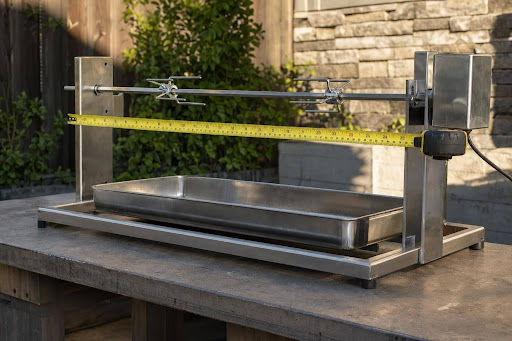
The motor turns the skewer, and its rating tells you how much weight it can handle. These ratings assume the load is balanced, so use a counterweight and position the meat carefully to protect the motor.
As a guide, portable battery motors are often suited to small roasts, while mains-powered motors are available for heavier backyard and commercial loads. Check the listed kilogram rating and make sure it suits the skewer size, such as 8 mm square or 19 mm to 22 mm round.
Step 3: Consider Size and Build
Spit length decides how much you can cook and whether the unit fits your space. A 1200 mm charcoal spit is a common backyard reference point, but smaller and larger formats may suit different patios, decks, or event setups.
Look for sturdy stainless construction, adjustable heights for heat control, and practical extras such as drip trays and wind shields. If you plan to use a rotisserie kit inside a kettle or gas barbecue, measure the clearance under the hood first so the food can turn freely.
Step 4: Accessories That Make Hosting Easier
The right add-ons make the cook more predictable. Useful options include baskets for wings and vegetables, extra prongs, gyro discs for stacked meats, a counterbalance weight, heat-resistant gloves, and a meat thermometer.
Choose accessories you will reuse across seasons. A thermometer is especially useful because it removes guesswork and helps you serve meat at a safe internal temperature. When comparing accessory bundles, Outdoor Living Abode can be a helpful reference because the range shows how motors, skewers, baskets, and frames are matched for different cooking styles.
Where to Browse Your Options
If you want to compare charcoal, dual fuel, and portable units side by side, a Barbecue Spit Rotisserie collection is a practical place to review sizes, motors, and accessories in one spot. The Outdoor Living Abode collection includes charcoal and wood options, dual fuel models that run on gas plus charcoal or wood, and portable rotisserie setups.
A Quick Guide to Who Should Choose What
Use your space, crowd size, and fuel preference to narrow the choice.
- Small patios and weeknight roasts: A gas kit with a basket keeps the cook quick and tidy.
- Camping or beach trips: A portable battery tripod is light and easy to carry.
- Big family feasts: A larger backyard motor on a 22 mm skewer can handle heavier cuts.
- Fundraisers or whole animal cooks: A heavier mains-powered motor is usually the better fit.
Two Safety Must Knows
Two checks protect your guests. First, cook to safe temperatures. FSANZ advises cooking poultry, minced or rolled meats, and offal to at least 75 degrees Celsius in the centre. FSANZ also defines the temperature danger zone as 5 to 60 degrees Celsius and recommends keeping perishable food at 5 degrees or colder, or above 60 degrees if it is held hot.
Second, respect fire bans. During a Total Fire Ban in NSW, solid fuel cooking is not permitted outdoors, and gas can be used only under the strict conditions listed by the NSW Rural Fire Service. Check your state authority on the day of your event.


