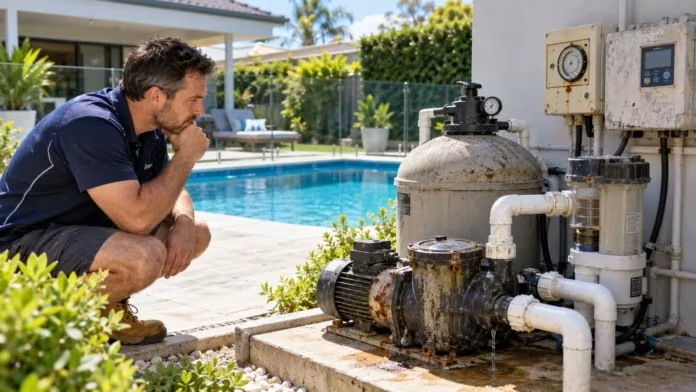

Pool equipment rarely fails all at once. More often, the pump becomes noisy, the chlorinator needs frequent attention, or the pool takes longer to clear after heavy use. Each problem may seem minor until repairs and running costs begin to add up.
For Australian pool owners, five signs make an equipment upgrade worth investigating: high pump electricity consumption, recurring filtration problems, unreliable chlorination, heating that no longer meets household needs, and repeated breakdowns across the equipment system.
The first step is to identify whether the problem comes from worn equipment, incorrect settings or a fault elsewhere in the system. Replacing a pump will not solve a blocked pipe, and installing a larger filter will not correct poor water chemistry.
Here is what to check before spending money on new equipment.
1. Your Pool Pump Is Costing More Than It Should
Pool pumps can account for a considerable share of household electricity consumption. An older single-speed pump may run at the same speed throughout its filtration cycle, even when that level of flow is unnecessary.
Variable-speed pumps allow lower-speed operation for suitable tasks, such as routine filtration, while providing higher flow when required by certain cleaning or other connected equipment.
Running at a lower speed can substantially reduce power consumption, although the actual benefit depends on the pool’s plumbing, required flow and operating schedule.
How much could a more efficient pump save?
Consider a simplified example.
| Existing pump | Replacement pump | |
|---|---|---|
| Average power consumption | 1.0 kW | 0.4 kW |
| Daily operating time | 8 hours | 10 hours |
| Daily electricity use | 8 kWh | 4 kWh |
| Annual electricity use | 2,920 kWh | 1,460 kWh |
| Annual cost at $0.30/kWh | $876 | $438 |
In this hypothetical example, the difference is $438 per year.
The figures are illustrative, not a savings estimate for a particular model. A lower-speed pump may need a longer operating period, and actual electricity consumption changes with pump speed and hydraulic conditions. Any comparison also needs to account for the cost of the new unit and installation.
Australian pool owners have another useful comparison tool: the Energy Rating Label. Pool pumps covered by the national energy-efficiency requirements must meet minimum performance standards and carry an energy rating.
The label shows an efficiency rating and estimated annual electricity consumption. Compare appropriately sized models with similar capabilities rather than choosing solely by the number of stars.
A replacement pump must also provide sufficient flow for the filter, chlorinator, heater and any other connected equipment. Buying a more powerful pump without checking those requirements can create additional problems.
2. The Pool Struggles to Stay Clear Despite Regular Maintenance
If water repeatedly becomes cloudy, start with testing and troubleshooting rather than shopping for a larger filter.
Cloudiness can result from inadequate filtration, low sanitiser levels, poor water balance, heavy use or fine suspended particles. Several of these problems may occur together.
A useful inspection starts with three questions:
- Is water circulating properly through the pool and filtration system?
- Is the filter clean, correctly assembled and operating within its permitted pressure and flow range?
- Are sanitiser concentration, pH and other relevant water chemistry readings appropriate?
A cartridge filter with clogged elements may need a thorough clean or new cartridges. A media filter may need backwashing, inspection or servicing, depending on its design and condition.
Replacing the entire filter becomes more reasonable when the housing is damaged, internal components have deteriorated or suitable parts are unavailable.
Filter sizing also matters. A new pump that delivers too much flow can exceed the filter’s rated capacity, while excessive plumbing resistance can prevent adequate circulation.
For this reason, pump and filter specifications should be checked together before either component is replaced.
3. Your Saltwater Chlorinator Is Becoming Unreliable
A saltwater pool still depends on chlorine to sanitise the water. The chlorinator generates chlorine from dissolved salt, but its output must be sufficient for the pool’s actual chlorine demand.
A chlorinator that produces less chlorine than expected may have an ageing cell, scaling, an electrical fault or unsuitable operating settings.
However, low free chlorine does not always indicate equipment failure.
Sunlight, swimmer load, organic contamination and insufficient operating time can increase chlorine demand. Salt concentration and water temperature may also affect chlorine generation, depending on the model.
Cyanuric acid (stabiliser) requires particular attention in outdoor pools. Too little stabiliser can allow sunlight to destroy chlorine more rapidly. Excessive stabiliser can reduce chlorine’s effectiveness at a given free chlorine concentration, even when a test shows chlorine is present.
These are water management issues rather than automatic reasons to replace the chlorinator.
Before buying a new unit, check:
- The existing cell’s condition and the manufacturer’s expected service life.
- Whether the control unit reports low salt, flow or cell-related faults.
- Whether the chlorinator’s production capacity matches the pool’s needs.
- Whether compatible replacement cells and electronic components remain available.
If the cell has reached the end of its service life but the controller is sound, replacing the cell alone may be sufficient.
A complete chlorinator upgrade becomes more attractive when the controller is unreliable, parts are unavailable or the equipment cannot consistently support the pool’s required chlorine production.
4. Your Pool Heater No Longer Suits Your Swimming Season
Heating requirements often change as a household’s use of its pool changes.
A heater installed for occasional summer swimming may no longer suit a family wanting regular use throughout spring and autumn. An older system may also become increasingly expensive or unreliable.
The right replacement depends on how quickly the pool needs to warm up and how frequently that temperature must be maintained.
Electric heat pumps generally suit planned heating over longer operating periods. Their heating output and efficiency vary with outdoor conditions, and they require adequate water flow and ventilation around the unit.
Gas heaters can be appropriate when faster temperature increases are important, subject to equipment capacity, available gas supply, operating costs and installation requirements.
Solar pool heating uses available solar energy, making its performance dependent on weather, collector area and system design.
Before replacing any heater, check whether it is actually receiving sufficient water flow.
A dirty filter, incorrect bypass setting or circulation problem may cause a heater to shut down, display a flow warning or deliver disappointing performance.
Heat loss is just as important. An uncovered outdoor pool can lose substantial heat through evaporation, especially during cool or windy Melbourne nights.
A suitable pool cover may improve the practical performance of an existing heating system without requiring a larger heater.
For an accurate replacement assessment, the installer needs the pool volume, target temperature, intended swimming months, existing equipment details and the proposed installation location.
5. You Keep Repairing Different Parts of the Equipment System
Repeated failures are particularly frustrating when each repair appears to solve the problem temporarily.
Consider a pool that has received a replacement pump, a new chlorinator cell and several valve repairs over the past few years. The equipment may still struggle because the original circulation and plumbing problems were never properly investigated.
Older equipment areas can also contain components added at different times without reviewing how they work together.
A replacement pump may exceed the existing filter’s recommended flow. Additional heating may introduce new hydraulic resistance. A chlorinator may operate below its flow requirement when a variable-speed pump is set too low.
In cases like these, a system-level inspection is more useful than replacing whichever component has most recently failed.
For homeowners planning pool equipment upgrades, checking the compatibility of the pump, filter, chlorinator, heater and plumbing can help determine which components should be retained, repaired or replaced.
That assessment can also establish the correct sequence of work. There is little value in buying a new pump if the planned heating installation will soon require a different hydraulic arrangement.
Repair, Replace or Upgrade in Stages?
A full equipment replacement is not always necessary. The better choice depends on the component’s condition, the fault and the overall system.
| Situation | Sensible next step |
|---|---|
| Pump is noisy but still circulating | Check bearings, motor condition, impeller and repair options |
| Filter pressure is unusually high | Investigate filter condition, valve positions and restrictions |
| Chlorinator output is declining | Test water chemistry and inspect the cell and controller |
| Heater displays flow errors | Check circulation and manufacturer-required flow before considering replacement |
| Several components are ageing or incompatible | Assess the complete equipment setup and plan staged upgrades |
A single failed component does not justify replacing an entire equipment area. Equally, continually repairing equipment that is unreliable, incompatible or approaching the end of its practical service life may become poor value.
A useful comparison includes the quoted repair cost, replacement cost, expected remaining service life and likely running expenses.
For energy-related upgrades, compare realistic annual electricity costs against the total installed price. The cheapest unit to purchase is not necessarily the cheapest to operate.
What to Check Before Ordering New Pool Equipment
A replacement unit should be selected for the existing pool rather than simply matching the dimensions or advertised horsepower of the old equipment.
Before contacting a supplier or installer, gather the following information:
- Pool details: Approximate volume, pool type and major connected features.
- Equipment information: Photographs of the pump, filter, chlorinator, heater and model labels.
- Operating schedule: Typical daily pump runtime, speed settings and heating requirements.
- Known faults: Error messages, leaks, unusual noises and recurring water-quality problems.
- Equipment layout: Available space, plumbing connections, service access and nearby electrical infrastructure.
These details help the installer identify compatibility issues before new equipment is ordered.
Installation responsibilities also need to be established. In Victoria, regulated electrical installation work must be carried out by appropriately licensed electrical workers through the required arrangements. Gasfitting and certain refrigerant-related work likewise require suitably qualified and authorised tradespeople.
Confirm which work is included in the equipment quote and which connections or upgrades need separate trades.
The Bottom Line
Before replacing pool equipment, find out what is failing and whether the proposed replacement will work with the rest of the system.
For pumps, compare actual energy use and required flow rates. For filters and chlorinators, rule out maintenance and water chemistry problems. For heating, assess circulation, heat loss and the household’s swimming schedule.
If several components need attention, ask for a system-wide assessment rather than separate replacement quotes that ignore equipment compatibility.
A few photographs, recent water-test results and the model numbers of the existing equipment can make that conversation far more useful — and help avoid paying for an upgrade that does not address the original problem.