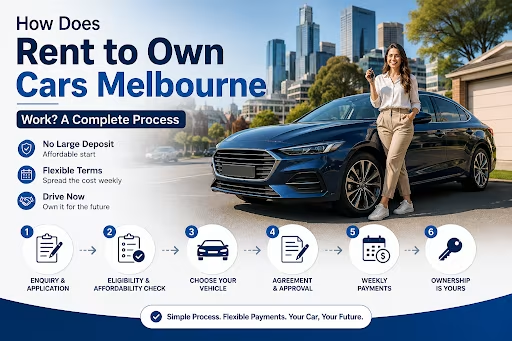

Basically, it is a very simple process as you buy a thing, not actually it is more than that like you want to buy a thing but you will not pay the whole amount you will pay installments, not enough you will get the thing in your custody. Finally, that thing will be your car. Rent to own cars Melbourne is a process where you quickly get a car on rent and then become owner after the completion of agreement.
What Actually Happens Step by Step?
You pick a car first, obviously something that fits what you’re actually using it for, whether that’s getting to work, running a business, or hauling kids around. Then you sit down and go through payment frequency, how long the term runs, what the total ends up being.
This is the part people rush and shouldn’t. Ask what happens if you miss a payment. Ask what servicing and insurance costs look like during the rental period, sometimes that’s on you, sometimes it’s baked into the agreement.
Once you’re happy with the terms, you sign, you start driving, and each payment chips away at the balance. When the term’s done and everything’s paid, the car gets transferred into your name properly, so let’s enjoy the process steps.
1. You Pick a Car
Unlike a normal loan, you’re not buying the car outright from day one. Instead, you choose a vehicle from a dealership or specialist provider that offers rent-to-own arrangements. Most providers in Melbourne have a set range of used cars that qualify for this kind of deal.
2. A Quick Approval Check
This is where rent-to-own really differs from a bank loan. Instead of a strict credit check, providers usually just want proof of:
- Steady income
- A valid driver’s licence
- Proof of address
Because you are not the owner of the car yet, renting it along with the option to own lenders gets more relaxed about just approving without credit history.
| Steps | Actions | Key Details |
| 1. Choose | Pick a car | Select a vehicle that fits your daily use, family, or business needs. |
| 2. Review | Check the terms | Look at payment frequency, term length, and total cost carefully. |
| 3. Question | Ask important details | Check rules for missed payments, insurance, servicing, and final price. |
| 4. Sign & Drive | Start the agreement | Sign the paperwork, drive the car, and make payments to lower the balance. |
| 5. Transfer | Own the vehicle | Get the car title in your name once the final payment is complete. |
3. Rental Contract
The incantations are as:
- The weekly or fortnightly rental amount
- The length of the contract (commonly 2–3 years)
- Whether there’s a final “balloon” or buyout payment at the end
- What happens if you want to end the agreement early
It’s worth reading this part carefully, since terms vary a lot between providers.
4. Regular Rental Payments
You pay a fixed amount weekly or fortnightly, similar to a car loan repayment. A portion of this goes toward the eventual ownership of the vehicle, while the rest covers the cost of “renting” it.
5. You Use the Car Like It’s Yours
During the rental period, you drive it, maintain it, and insure it just like an owner would even though legal ownership technically stays with the finance company until the contract ends.
6. You Reach the End of the Term
At the end of the agreed period, you typically have a few options:
- Pay the final buyout amount (if there is one) and take full ownership
- Continue payments if the contract is structured so ownership transfers automatically once all payments are made
- Return the car if you decide not to continue (though this can come with penalties)
7. Ownership will Transfer to You
Once the final payment is made, the title transfers into your name and the car is officially yours no more repayments, no more provider involvement.
How It’s Different from Just Getting a Loan?
A loan gets you a lump sum, you buy the car outright, and then you’re paying the bank back over years with interest attached. Rent to own flips the order around, you don’t own it yet, you’re renting with ownership as the endpoint, and the car itself is kind of the security in the deal rather than your credit history.
Who It Tends to Suit?
Not everyone, honestly. If you’ve got solid credit and can get a normal loan at a decent rate, that might just work out cheaper for you, worth comparing both before assuming rent to own is automatically the better move.
But for new arrivals still building a credit file, for people running their own business whose income banks find hard to categorise, for anyone climbing back from a financial setback, or even just someone who wants to properly test a car in daily life before committing years of payments to it this tends to be the more realistic option.
Bottom Line
Getting a car in Melbourne shouldn’t hinge entirely on whether you tick every box a bank wants ticked. Rent to own cars Melbourne gives people a genuine way to get driving now and work toward full ownership over time, without as many of the usual hurdles in the way. If you’re trying to work out how to rent to own a car without draining your savings account, it’s worth having a real conversation about it rather than guessing, reach out to vitalrental.com.au and see what actually makes sense for your situation.