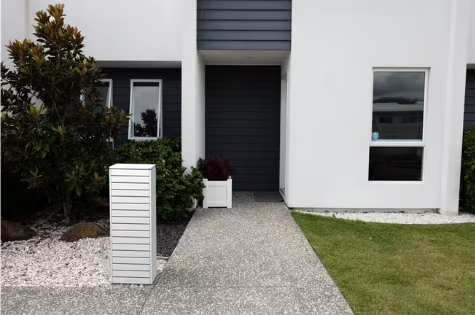
There is a small, silent negotiation that happens at Australian front gates thousands of times a day. A delivery driver stands there, parcel in hand, scanning the property for somewhere to put it. Behind the flyscreen there is nobody home. The clock in their app is ticking. In the next ten seconds, one of three things happens: the parcel gets a hiding spot and a photo, it gets carried back to the van, or it gets left in plain sight of the street. Whichever one they choose, you live with the result.
The front yard was never designed for this. It was designed for a postie on a motorbike sliding envelopes into a slot. But Australians now receive parcels at a rate the humble mail slot never imagined, and most homes have quietly outsourced the problem to luck: luck that someone is home, luck that the weather holds, luck that nobody walking past has sticky fingers.
What drivers are actually looking for
Talk to anyone who delivers for a living and the logic is disarmingly simple. They want a spot that is out of sight from the footpath, protected from rain, and obvious enough to find in seconds. If the property offers one, the parcel gets left and everyone is happy. If it does not, the driver improvises, and improvisation is where doorstep photos of a package balanced on a doormat come from.
Which means the fix is not really about couriers at all. It is about whether your front boundary offers that spot by design.
The ladder of fixes, from free to permanent
The cheapest step is instructions: most carriers let you nominate a safe place in your delivery preferences, and a specific note beats a vague one every time. Behind the second pot plant works; somewhere safe does not.
The next step is borrowed infrastructure: parcel lockers and collection points do the securing for you, at the cost of a detour every time something arrives. Fine for the occasional order, tiresome for a household that shops online weekly.
The permanent step is giving the driver a purpose-built target at the boundary: a parcel letterbox with a one-way chute and a locked compartment, so the safe spot is not a hiding place but a piece of hardware. Purpose-built ranges such as Dagood parcel solutions pair that one-way drop with weather-resistant steel, which quietly retires the whole negotiation: the driver sees the chute, the parcel disappears into a locked box, and the doorstep photo shows a closed door instead of a cardboard invitation.
A note on sizing your expectations
One practical habit saves most of the buyer regret in this category: before choosing any solution, measure a fortnight of your actual deliveries. Households are routinely surprised by how consistent their parcels are, mostly satchels and shoebox cartons, and how rarely the giant box actually turns up. Solve for the weekly reality and let the annual exception go to a collection point.
The quiet payoff
The best measure of getting this right is that nothing happens. No collection slips on the fridge, no redelivery roulette, no group-chat photos of a package sunbathing on a porch. Online shopping keeps its convenience the whole way to your door, which was always the point. The front yard earned a promotion during the online shopping boom; it just needs the equipment to do the new job.