

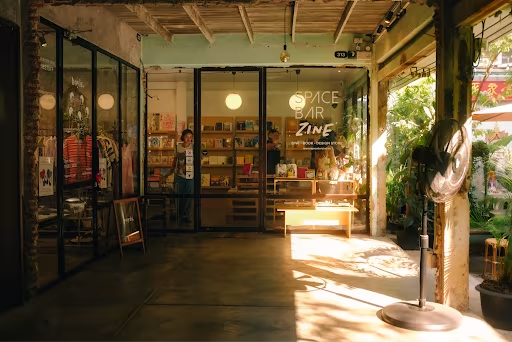

Shoppers often decide in seconds whether to step inside. They notice the footpath first: clean and clear, or grimy and slick. Then they see the entry and first wall of products. That quick glance tells customers how much care goes into a place.
The good news is that you do not need a full renovation. Two focused changes can help a store feel better outside and in: one tidies walls so products look organised, and the other keeps the entrance sharper and safer underfoot. Here is how both work in day-to-day retail settings.
Why small, visible changes work in Australia’s retail streets
Presentation quietly drives foot traffic. Brisbane City Council’s Shops that Shine visual merchandising guidance notes that a clean, well-kept storefront shapes how people feel before they walk in. Shoppers notice it without thinking.
Inside, the same logic applies to stock displays. Business Queensland suggests refreshing window displays every two to four weeks so presentation stays current. Regular checks, plus professional help for harder tasks like exterior deep cleaning, keep the whole picture intentional rather than tired.
Make merchandising easier with slatwall
Slatwall is a wall panel cut with horizontal grooves. You slot in hooks, brackets, shelves and bins, then rearrange them whenever your stock changes. That flexibility is the main appeal. Instead of drilling new fixings every season, you can move accessories along the grooves.
Australian suppliers tend to work to similar formats. Dinya Shop Fittings lists standard panels at 2400 by 1200 mm in landscape and 1200 by 2400 mm in portrait, with 100 mm groove spacing common. All Dinya Shop Fittings slatwall panels include aluminium inserts, and the company ships slatwall products Australia-wide. One listed panel starts from $129.50 including GST for a Walnut finish with silver inserts, though that is only a single example.
It is worth being realistic here. Load ratings vary by setup, and not every finish is offered on every panel, so check the specifics before you commit.
Plan your panels: orientation, spacing and finishes
A few decisions shape how your wall works. Landscape orientation suits long, low runs, while portrait suits tall, narrow spaces. Groove spacing matters too. Some Australian suppliers offer spacing at 100, 150 or 200 mm centres, and 16 mm MDF panels in a 2400 by 1200 mm size are common.
Finishes range from timber looks to plain colours, and inserts affect both the look and how the grooves hold up. If you are comparing wall systems for an Australian fit-out, this slat wall panel range from Dinya Shop Fittings shows common sizes, finishes and compatible accessories you can mix and match.
While you are rethinking the wall, it is a good time to think about messaging too. Clear pricing and promotion cards help customers browse without asking for help, and there are simple ways to improve in-store signage that pair well with a fresh display layout.

Clean exteriors that look sharp and feel safe
Now for the outside. A clean entrance does two jobs at once. It lifts street appeal, and it reduces slip risk on the surfaces people walk across every day.
Regulator guidance connects appearance with safety. SafeWork NSW advises that periodic deep cleaning is generally needed to remove build-up that reduces floor grip. WorkSafe Victoria lists outdoor slip hazards like moss and wet surfaces, and stresses regular cleaning. The grime that dulls your frontage can also make it slippery. Managing these risks also means thinking about how to control foot traffic flow and isolate hazards when they do occur; safety barriers can redirect customers away from wet or damaged areas while cleaning takes place.
A cleaning routine that keeps entries and walkways clear is worth building into regular upkeep, not leaving until things look bad.
Soft wash versus pressure wash: choose for the surface

No single method suits everything, so match the approach to the surface. High-pressure washing works well on hard pavements and concrete, where you need to shift ingrained dirt and moss. Soft washing uses lower pressure and is gentler on delicate materials. For heritage or sensitive surfaces, NSW heritage cleaning guidance recommends the gentlest means and avoiding high-pressure or abrasive methods. When in doubt, test a small area first and get advice.
Fit cleaning around trading hours
The practical worry for most owners is disruption. You do not want a wet, roped-off entrance during your busiest hours. Many providers offer after-hours and weekend scheduling for exactly this reason. Gold Coast and Brisbane retailers can use professional commercial pressure washing services to schedule after-hours cleaning and clear walkways without interrupting trade.
The process is usually straightforward. You get a quote, agree on a time that suits your trading pattern, the crew cleans, and you sign off on the result. Professional Pressure Wash is based in Southport and services the Gold Coast and Brisbane. Its services include cleaning walkways and entries to help restore traction and remove slip hazards.
Conclusion
You do not have to gut the place to make it feel fresh. Flexible slatwall from Dinya Shop Fittings makes products easier to display and rearrange as stock moves. Scheduled cleaning from a provider such as Professional Pressure Wash keeps your entrance looking cared for and safer to walk on. Together, they lift first impressions and improve store flow without a costly closure. Start with whichever one your customers would notice first.
FAQs
What are slatwall panels used for in shops?
They are grooved wall panels that hold hooks, shelves, brackets and bins, letting you display and rearrange stock quickly. Because the accessories slot into the grooves, you can change a layout without new drilling. Suppliers like Dinya Shop Fittings list common sizes such as 2400 by 1200 mm with 100 mm groove spacing.
Is pressure washing safe for painted walls and signs?
Not always. High pressure can damage delicate or painted surfaces. NSW heritage guidance recommends the gentlest effective method for sensitive materials, so soft washing or a lower-pressure approach is often better for signage and painted areas. Test a small spot first and get advice if you are unsure.




