

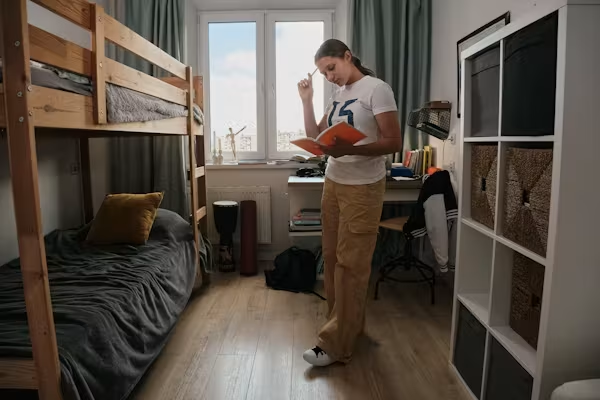

Moving to Sydney for uni sounds exciting right up until you start looking for somewhere to live. Then suddenly you’re comparing weekly rent, train lines, bond rules and tiny bedrooms photographed with a suspiciously wide-angle lens. If you’re sorting out student housing options in Sydney before the semester starts, it helps to know which compromises are normal and which ones will make your first few months much harder than they need to be.
I learned pretty quickly that the cheapest room isn’t always the cheapest option once everything else gets added in. And the place that looks ‘close to the city’ on a map might still involve a bus, a train and a ten-minute uphill walk with groceries. Sydney has a way of making distance slightly deceptive.
Mistake one: choosing by rent alone
This is probably the most obvious mistake. It’s also the one people keep making.
Say one room costs $40 less per week than another. Great. But then you realise the cheaper place means paying for public transport every day, spending an extra hour commuting and buying your own furniture. Maybe the internet isn’t included either.
Suddenly that $40 saving isn’t really $40.
When comparing places, I’d look at the whole weekly cost. Rent matters, obviously, but so do transport, electricity, internet, laundry and the random household bits nobody thinks about until they need them. A frying pan. A clothes rack. A desk lamp. Somehow you end up at Kmart spending $87 on things you didn’t know you owned back home. It adds up fast.
Mistake two: assuming “near uni” means an easy commute
Sydney isn’t laid out like one neat little student town.
Your university might be close to the CBD, further south, across the harbour or somewhere that looks perfectly manageable until you check the actual route. Always test the trip properly.
Don’t just search the distance in kilometres. Put the address into a transport app and check how long it takes at 8:00 am on a weekday. Then check the journey home after an evening class too.
A 25-minute train ride with one direct service can feel easy. A 25-minute journey involving two buses and a transfer can become annoying very quickly.
And yes, you might tell yourself you’ll use the commute to study. You probably won’t. Well, most of the time anyway.
Mistake three: leaving the search until orientation week
This one gets messy.
Students arrive in Sydney at similar times. That means a lot of people are hunting for rooms just before major university intakes.
If you wait until you’ve already landed, you may end up making rushed decisions because your hotel or Airbnb is costing you money every night. That pressure is horrible. Suddenly the weird room with no proper window starts looking reasonable.
Try to begin researching neighbourhoods well before you move. You don’t necessarily need to sign something months ahead, but you should know what prices look like, what areas suit your campus and what kind of accommodation you actually want. That last part matters more than people think.
Mistake four: pretending you’ll become a completely different person
This sounds strange, but stay with me.
People often choose accommodation based on the version of themselves they imagine becoming at university.
“I’ll cook every meal.”
“I won’t mind living 50 minutes away.”
“I’ll study in the library every night.”
“I don’t need much storage.”
Maybe.
But if you’ve always hated long commutes, you’re probably still going to hate them in Sydney. If you know you like being around people, living alone in a quiet outer suburb might feel isolating. And if cooking is already something you avoid, don’t build your entire budget around making lentils from scratch six nights a week. Choose somewhere that works with your habits, not against them.
Mistake five: forgetting what daily life actually looks like
Property listings focus on bedrooms and kitchens. Real life includes everything else.
Where are you buying groceries?
Can you walk home safely after a late class?
Is there somewhere nearby to grab coffee before a morning lecture?
What happens when it’s raining sideways and you’ve got a backpack full of books?
These boring little details often matter more than whether the room has a fashionable lamp in the photos.
I’d also check the laundry situation. Seriously. Nothing makes you reconsider your housing choices quite like carrying a basket of damp clothes through a building because every machine is occupied. And look for somewhere comfortable to study.
A desk in your room is useful, but shared study spaces can be even better when your bedroom starts feeling like a cave around assignment week.
Mistake six: sending money before checking who you’re dealing with
Rental scams are especially nasty when you’re moving from interstate or overseas because you can’t always inspect a property yourself.
Be cautious if someone wants money immediately, refuses to show you the room properly or claims there are five other people ready to transfer a deposit within the next hour. Pressure is a warning sign.
Ask questions. Check the address. Read the agreement. Find out exactly what you’re paying for and what happens if your plans change. And don’t feel embarrassed about being cautious. Housing involves a lot of money.
Mistake seven: thinking your first room has to be perfect
Your first Sydney address probably won’t be your forever home.
Actually, scratch that. Hopefully it isn’t. Part of being a student is figuring out what you like.
You may discover that you love living right in the middle of everything. Or you may decide that after six months of sirens, traffic and somebody burning toast in the communal kitchen at 1:00 am, you’d happily move somewhere quieter. That’s normal. The goal isn’t to find a flawless place. It’s to find somewhere safe, manageable and practical enough that housing doesn’t dominate your first semester.
Because you’ve already got plenty else going on.
New campus. New people. New routines. Probably a few questionable decisions involving cheap takeaway. Your accommodation should make all of that easier, not become another problem you need to solve every Tuesday night.




