Someone plants a screen, waits two years, and it’s patchy. Gaps where there shouldn’t be gaps. A neighbour’s window still visible through a spot that was supposed to be solid by now. That’s rarely a planting mistake. It’s usually a plant selection mistake made two years earlier, before anyone could tell the difference. A hedge grows unevenly. A row of conifers takes forever and still leaves gaps low down where privacy actually matters most. Bamboo screening is worth a proper look before committing to either, since it solves for exactly the problems that make both of those frustrating in the first place.
Why Slow Growers Get Chosen So Often
Most screening plants sold at nurseries are chosen for how they look on the day, not for how fast or evenly they’ll actually close a gap. A young hedge looks fine in a pot. It’s only two or three years later, once it’s meant to be doing its job, that the uneven growth becomes obvious. By then, replacing it means starting the wait all over again.
What Actually Makes a Screen Work
A few things separate a screen that closes properly from one that stays patchy for years:
- Growth rate, since a slow grower means years of visible gaps before it’s doing its job
- Density from the base up, not just at the top, which is where most conifers and hedges fall short
- Consistent growth across the whole row rather than a few plants racing ahead of the rest
- Root behaviour, particularly near shared fences, pools, or underground services
Skip any of these and the screen might still look fine in a nursery photo. It just won’t function the way it’s meant to once it’s actually in the ground.
The Root System Question Nobody Asks Upfront
There’s a hesitation some people have around bamboo specifically, a worry about runners spreading uncontrollably into the rest of the yard or a neighbour’s property. That reputation comes from running bamboo varieties planted without any containment. Clumping varieties behave completely differently, growing outward from a tight base rather than sending runners underground, which is the distinction that actually matters when choosing a screening plant.
Why It Closes Faster Than People Expect
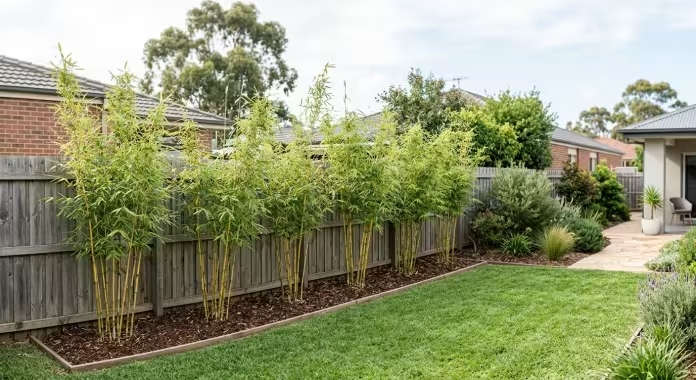
Once established, clumping bamboo tends to fill in density from ground level to full height far faster than a hedge or conifer row, precisely because it’s not relying on lateral branching to fill gaps the way a shrub does. The canes themselves provide density immediately, with foliage filling in around them as the plant matures.
Worth Getting Right the First Time
Anyone choosing a screen based purely on what looks good in a pot is optimising for the wrong two years. A screen that’s slow, uneven, or gappy at the base ends up needing replacement anyway, which means paying for the wait twice. The right variety, matched properly to the space and purpose, tends to be the difference between a screen that works and one that needs revisiting in three years.