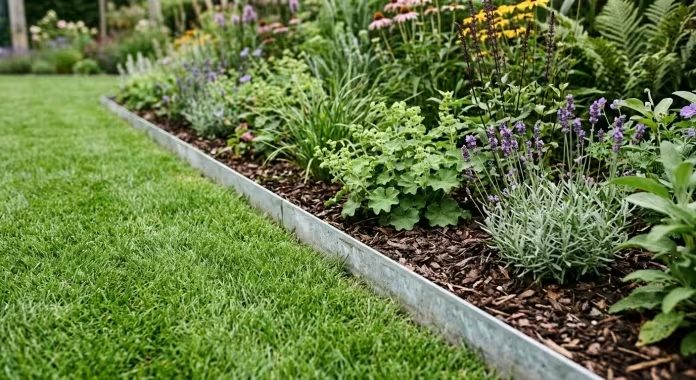

Most people picture garden edging as an afterthought. A strip of plastic pushed into the dirt, maybe some old bricks laid on their side, something that exists purely to stop the lawn creeping into the mulch. That image is where most homeowners start, and it’s also why so many of them end up redoing their edging every few years without ever asking why. galvanised garden edging looks different. Sometimes it looks like almost nothing at all, just a thin, clean line between lawn and bed, which is exactly the point. Most people who go looking into it have already redone timber or plastic edging at least once and started wondering if there’s a version of this that actually holds.
The Wear People Don’t Notice Until It’s Bad
Timber cups and splits after a wet season, but slowly enough that nobody clocks it happening. Plastic edging goes brittle in the sun and cracks the first time a mower wheel catches it wrong. None of this reads as a big failure in the moment. It just reads as normal maintenance, the kind everyone assumes comes with having a garden. Most people don’t realise there’s an edging option that skips this cycle entirely until someone points it out.
Why Steel Gets Overlooked for So Long
Steel has a reputation problem it doesn’t deserve. People hear “steel” and picture something heavy, expensive, industrial, wrong for a garden that’s supposed to feel soft and considered. That reputation comes from raw steel, which does rust fast in damp soil. Galvanised steel is a different material entirely. The zinc coating corrodes in place of the steel underneath, and coatings can hold up for decades depending on local conditions, which means the edge holds its line and finish for decades rather than seasons. It’s a small piece of chemistry doing a lot of quiet work.
A few things about galvanised edging that tend to surprise people:
- The zinc coating is sacrificial, it wears down protecting the steel, not the other way around
- A properly installed edge often outlasts the garden design built around it
- The profile is thin enough, usually 1.6mm to 3mm, that it barely reads as a border at all
- It handles curves better than most people expect, though anything under a 300mm radius needs pre-bent sections
- Coastal or heavily irrigated gardens will see the coating wear faster, so it’s not universally maintenance-free
None of that shows up in the plastic-strip mental image most people start with. That’s exactly why it gets dismissed before anyone’s actually compared the two side by side.
It’s Not About Looking Expensive
There’s a hesitation some homeowners have with steel, a worry it’ll look stark or commercial against soft planting. It’s the opposite in practice. Because the profile is so thin, a galvanised edge tends to disappear into the design rather than compete with it. Landscape designers lean on this constantly. The edge isn’t meant to be the feature. It’s meant to hold the line so the planting can be the feature.
What Actually Changes Once It’s In
The upfront cost is higher than plastic, sometimes close to double, and that’s usually where the conversation stalls before anyone gets further. But plastic typically needs replacing every five to eight years, and each replacement means digging into the same root systems again, reshaping the bed edge slightly every time it’s redone. Run that out over fifteen or twenty years and steel tends to come out ahead, sometimes by a wide margin.
It’s not the right call for every garden. A cottage-style bed with deliberately soft, informal borders might genuinely suit something less structured. But for a clean line that’s still straight in ten years, steel is hard to argue with.
If any of this sounds familiar
Anyone who’s replaced edging more than once, or noticed the lawn line creeping again after “just redoing it,” is usually looking at the same underlying problem. Not bad luck, just a material that was never built to hold its shape long term. Galvanised steel edging isn’t flashy, and it’s not trying to be. It just tends to still be there, doing its job, long after the alternative would’ve needed replacing again.