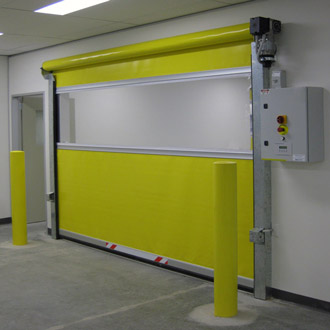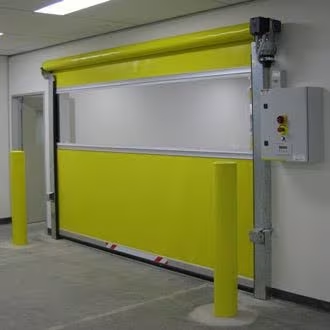

Traditional roller doors dominated commercial and industrial settings for decades. Their simple construction and straightforward operation made them popular in warehouses, loading docks, and service centres. However, operational expectations have shifted, exposing meaningful limits in those older designs.
Facility managers today juggle demands for energy efficiency, lower maintenance overhead, and faster daily throughput. These pressures push businesses towards door systems designed for current conditions rather than past ones. The shift mirrors practical needs rather than industry novelty.
Speed and Operational Efficiency
Conventional roller doors typically operate at 0.1 to 0.3 metres per second. This gradual movement creates bottlenecks whenever traffic picks up. High-speed doors reach opening velocities of 1.5 to 2.5 metres per second, cutting transit delays dramatically. Faster cycles also mean openings stay exposed for shorter intervals.
Climate-controlled spaces benefit greatly from reduced thermal exchange between interior and exterior. Forklift operators move through with shorter waits, improving overall workflow. Austcold Industries builds Rapidoor systems specifically for demanding commercial environments where uptime cannot slip.
Impact on Traffic Flow
Busy facilities notice real improvements once they upgrade their door systems. Loading bays handling multiple vehicles per hour see the clearest gains. Each second saved during open and close cycles adds up across hundreds of daily movements. Temperature-sensitive operations eliminate the prolonged exposure that slower doors permit.
Workers spend less time idling besides open portals. Operational gains translate into measurable productivity lifts across logistics, manufacturing, and distribution sectors.
Energy Conservation Benefits
Open doorways act as significant thermal transfer points across any building envelope. Lengthy open periods during each cycle significantly increase heat or cooling loss. Rapid closure shrinks the window in which conditioned air escapes. Heating and cooling systems then run more efficiently as a result. Facilities running multiple doorways experience cumulative savings that show up on monthly utility bills. Rising energy prices across commercial sectors make this efficiency relevant for any operation watching overheads.
Durability and Maintenance Requirements
Traditional roller doors contain many mechanical components that wear over time. Springs, cables, and rollers undergo repetitive stress throughout each cycle. Component failures interrupt operations and trigger costly emergency repairs.
High-speed doors rely on simplified mechanisms with fewer moving parts. Engineered materials resist degradation from weather exposure and frequent use. As a result, lower servicing needs lead to reduced total ownership costs over the equipment’s lifespan.
Design Innovations
Modern high-speed doors incorporate advanced materials such as reinforced PVC and aluminium alloys. These constructions deliver structural strength without the heavy weight of traditional steel panels. Safety elements including photoelectric sensors and automatic reversal mechanisms come fitted as standard.
Flexible curtain designs absorb accidental impacts more readily than rigid panels. Engineering advances like these explain why facilities that prioritise reliability now favour these systems.
Application Versatility
Contemporary operations need flexibility that older designs simply cannot offer. Freezer rooms, cleanrooms, and production lines each bring distinct requirements. High-speed doors accommodate temperature differentials ranging from around minus 25 degrees Celsius through ambient conditions.
Insulated curtain options handle thermal isolation needs in cold storage. Ventilation models support airflow while keeping physical separation intact. This range makes them well suited to food processing, pharmaceutical, and manufacturing facilities alike.
Industry-Specific Advantages
Food production facilities gain from rapid cycling that protects hygiene standards. Pharmaceutical operations rely on controlled environments that limit contamination risks. Manufacturing settings need reliable barriers capable of sustained operation through long shifts.
Each sector values specific door configurations matched to its needs. Choosing purpose-engineered models over generic alternatives gives serious operators a meaningful edge.
Safety Considerations
Workplace safety regulations continue tightening across most jurisdictions. Traditional roller doors pose crushing hazards during operation because of how their mechanics behave. High-speed systems layer in safety mechanisms such as soft bottom edges and pressure-sensitive seals.
Automatic shutdown kicks in when obstacles block the closing path. These protective features cut liability exposure for facility operators. Employees also work more comfortably near automated barriers engineered with safety as a core priority.
Conclusion
Several practical factors drive the shift from conventional roller doors to faster alternatives. Operational efficiency, energy conservation, durability, and worker safety all favour modern designs. Facility managers recognise that door systems shape overall productivity more than many realise.
A higher initial investment pays back through reduced operating costs and lower maintenance demands. As commercial operations centre on efficiency and sustainability, rapid door systems are a logical upgrade. The transition spreading across Australian industry reflects sound economics rather than trend-driven excitement.
Image Source:- https://austcoldindustries.com.au/wp-content/uploads/2017/04/High-Speed-Door-RD1000_yellow.jpg