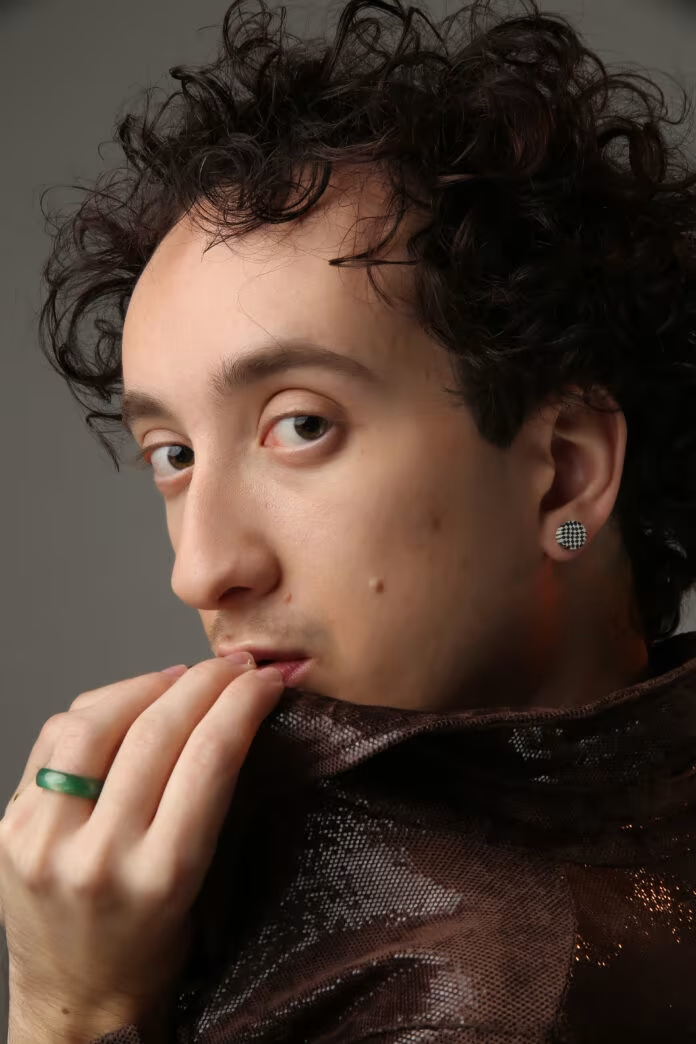
Daniel Leckerman’s latest release, “Karma”, explores nostalgia, self-acceptance and the complicated process of letting go. Alongside his work as an artist, Daniel is also the founder of The Harmony Dialogue, advocating for greater accessibility and representation across the music industry. We caught up with Daniel to talk about “Karma”, his journey, Glasgow’s grassroots music scene, and his hopes for a more inclusive future in music.
“Karma” explores the tension between holding onto memories and moving forward. As you look back on your own journey, what have you found hardest to let go of and what have you learned from doing so?
One of the hardest parts I’ve found about letting go is not only accepting change but holding space and honouring what you’ve been through. For 5 years I lived in London, and explored parts of myself like never before. Last year I moved back to my hometown Glasgow, and have been reconnecting with my roots and worked on creating more stability. I have struggled with my health and anxiety. Being in a position where your only option is to focus on your wellbeing, really puts things into perspective. I’ve also learnt that you have to be your biggest cheerleader and believe in yourself.
Your music often combines emotionally vulnerable lyrics with energetic, electronic production. What draws you to that contrast, and what can an upbeat sound express that a slower or more stripped-back song perhaps cannot?
I have really gravitated towards more electronic sounds and upbeat rhythms because I love to dance and find release through music. I tend to write about self-acceptance and honouring my path, and by default it always gets deep. I find the production can bring energy and dynamics, but I’m a highly sensitive person so I like to keep things as punchy as possible whilst feeling the feels.
You’ve described “Karma” as being about nostalgia, comfort, and letting go of the past. Has your understanding of those ideas changed between writing the song and releasing it to the world?
That’s a great question! I wrote karma from a slightly different angle. It’s about learning to feel at peace and appreciating how the past has shaped you. Life is about balance. Nostalgia can act as the inspiration when it comes to growth. I think it’s important to be true to yourself but when you’re used to a certain reality or experience, and you’re trying to adapt and reinvent yourself, it can feel bittersweet. One thing I noticed when I released this song was how important it is to have a strong and consistent brand. Karma being a b*tch was the message that I think stood out most to people, because I think that adds a level of playfulness.
You’re not only an artist but also the founder of The Harmony Dialogue. How has working to improve accessibility and representation within the music industry changed the way you think about your own career?
Again, a wonderful question! I’ve had alot of deep chats the past few years with other disabled music industry workers, and the reality is that the amount of stigma and access barriers prevalent, is not a one size fits all salutation and unfortunately most of these are systemic issues. The harmony dialogue has given myself and others a platform to spread awareness and connect. I used to struggle identifying as disabled but learning more about the social model and disability culture can feel empowering. In terms of how it shapes my own career path, I meet so many amazing talented people and learn from different stories. Being a disabled artist doesn’t define who I am, and sometimes I do feel like being disabled isn’t marketable in the music industry. I think we’ve got along way to go when it comes to language and representation. I think things are slowly changing and it’s important to continue elevating disabled voices in the industry.

What do you think the music industry still gets wrong when it comes to creating genuinely accessible spaces for disabled artists and audiences?
Disabled people are a 1/4 of the population. The music industry wouldn’t be where it is today without disabled people. There’s no such thing as a ‘fully accessible’ event. Lastly, I would say that events for and led by disabled folk in the industry are important but it’s also equally important that we are actively included in industry wide discussions and roles.
You’ve become involved in Glasgow’s grassroots music community through live events and supporting emerging artists. What is it about that local scene that continues to inspire you?
The Glasgow scene has a wide variety of great talent. Glasgow doesn’t have the best infrastructure, and many grassroots venues are shutting down, but the amount of really cool events and programmes has been pretty consistent. Scottish musicians are generally proud to be Scottish. I think Glasgow being on the national touring circuit is a massive advantage and I think links between local and international connections are increasing.
Your work brings together music, advocacy, and community. Do you see these as three separate parts of your life, or have they become increasingly connected as your career has developed?
Advocacy, music and community are at the forefront of my work, and whilst they’re all separate things, more doors open when I embrace these 3 as very connected. I can see this increasing because it gives me drive, story, and is a reflection of my values.
As you move into the next chapter of your career, what would success look like for you? Both as an artist and as someone working to make the music industry more inclusive?
Success is subjective. I think stability is actually really important and sometimes the music industry is so unpredictable and chaotic. I think it’s always healthy to build a strong foundation and ask yourself what you need. I’ve been performing more shows and I’d love to play more often and at festivals. I’m really keen to co-write with bigger artists. As someone working within accessibility in the industry, I’d love to also work alongside labels, publishers, managers and to grow the harmony dialogue community within Scotland and across the globe.