
Tetras are a popular starting point for home aquariums in Australia. They’re small, active and often suitable for peaceful community tanks.
Two things matter most at the beginning: cycle the tank before the fish arrive, and buy enough of one species for them to form a proper school.
Most small tetras live three to five years with steady care, and neons often reach the upper end of that. The work you do in the first month largely decides which end of the range you get.
Choose your species and size the tank
Tetras are schooling fish. When kept alone or in pairs, they may hide or behave nervously, so plan on keeping at least six of the same species.
For a first tropical aquarium, the RSPCA recommends a minimum volume of 50 litres and notes that larger tanks and filters are generally better for fish welfare. A larger volume is also more forgiving because temperature and water chemistry tend to change more slowly.
Shape matters as much as volume. Schooling fish swim horizontally, so a long 60-litre tank suits them better than a tall one of the same capacity. Footprint beats height for this group.
Species worth considering
Neon tetras are the default first choice, hardy enough for a cycled beginner tank and cheap enough to buy a proper group. Cardinal tetras look similar but prefer warmer, softer water and cost more.
Ember tetras and glowlight tetras suit smaller aquariums and shoal tightly. Rummy-nose tetras are among the best schooling species you can keep, though they are sensitive to unstable water and will tell you when something is wrong by losing the red on their faces.
One warning that beginner guides often skip. Serpae tetras and black skirt tetras are themselves fin nippers, particularly in groups that are too small. If you want a peaceful tank, these are not the tetras for it.
The essential gear
You don’t need a complicated setup, but each item should serve a clear purpose.
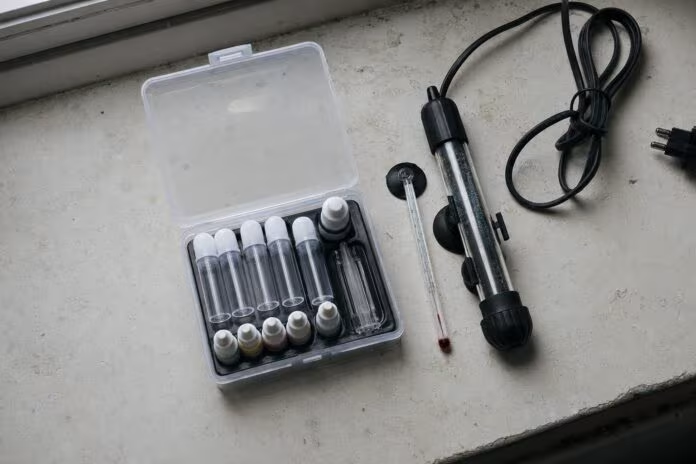
- A heater and separate thermometer, so you can confirm that the water stays at the intended temperature
- A filter sized for the aquarium. A common starting point is a filter that turns over about four times the tank’s volume each hour, although stocking levels and filter design also matter
- Water conditioner to neutralise chlorine or chloramine in tap water
- A liquid test kit for ammonia, nitrite, nitrate and pH
- Substrate, plants and hardscape that provide shelter without crowding the swimming area
- A tight-fitting lid and a timer for a consistent day and night lighting cycle
Set up and cycle the aquarium
Rinse the empty tank, substrate and decorations with plain water, and don’t use soap or household cleaners.
Position the hardscape, fill the tank, add water conditioner and start the heater and filter. Plants can be added while the water settles.
Cycling grows beneficial bacteria in the filter. These bacteria process ammonia from fish waste, first into nitrite and then into less harmful nitrate. Both ammonia and nitrite are toxic to fish, so the tank should be cycled before it is stocked.
Those bacteria live on the surfaces inside your filter, which is why the choice of filter media affects how much biological capacity you actually have. Combining a coarser mechanical layer with a denser biological one gives you both particle removal and somewhere for the colony to establish.
A fishless cycle commonly takes four to six weeks. Use an appropriate ammonia source according to its instructions, then test the water every two or three days and record the results. The cycle is complete when the filter can process the added ammonia and both ammonia and nitrite return to zero.
Know your local water
Many tropical tetras are kept at about 24 to 26°C and a pH near 6.5 to 7.5, but suitable conditions vary by species. Keep ammonia and nitrite at zero and nitrate as low as practical through water changes.
Hardness is the variable most beginners overlook, and it differs considerably between Australian cities. Melbourne’s supply is naturally very soft, while parts of Adelaide, Perth and regional South Australia run considerably harder.
That single difference decides which species will do well for you. Cardinal and rummy-nose tetras favour softer water, so they suit a Melbourne tank more readily than a hard-water one. Check your local water authority’s published figures before committing to a species rather than after.
Stock and acclimate the fish
Begin with one school of six to ten tetras of the same species, provided the tank is large enough. One suitable group usually behaves more naturally than two undersized schools.
To acclimate new fish, float the sealed bag for about 20 minutes to reduce the temperature difference, then gradually introduce small amounts of tank water to the bag. Follow the seller’s instructions, especially if the water chemistry differs significantly.
Transfer the fish with a net and discard the shop water rather than pouring it into the aquarium.
If you are adding fish to an aquarium that already holds stock, quarantine the new arrivals in a separate tank for around 30 days first. It is the least convenient piece of advice in fishkeeping and the one that prevents the most losses.
Choose compatible tank mates
Corydoras catfish, otocinclus, small rasboras, honey gouramis and peaceful dwarf cichlids such as apistogramma generally work well alongside tetras. Shrimp and snails add cleanup without competing for swimming space.
Avoid known fin nippers and fish large enough to treat a tetra as food. Tiger barbs, male bettas, angelfish and most larger cichlids fall into one category or the other.
Match the water as well as the temperament. A fish that thrives in hard, alkaline water is a poor companion for soft-water tetras regardless of how peaceful it is. Research every species rather than relying only on a general community-fish label.

Follow a simple care routine
A quick daily check is enough on most days. Confirm the temperature, count the fish and watch how they swim and feed. Hiding, gasping, clamped fins or unusual spots can indicate stress or illness.
Offer only as much food as the fish consume within a minute or two. Uneaten food breaks down into waste, which can raise ammonia and nitrate levels.
Each week, test the water and complete a partial water change using conditioned water at a similar temperature. Siphon debris from the substrate as needed. Rinse reusable media gently in the removed tank water rather than under the tap, which may harm beneficial bacteria.
Know what to look for when buying
Inspect the tanks before choosing individual fish. Crowding, dead fish, clamped fins, gasping or visible white spots are reasons to buy elsewhere. Healthy tetras should generally look alert, swim steadily and respond when the group moves.
Ask the seller about the fish’s current temperature, pH, diet and time in stock. This information can help you make the transition less stressful. LiveFish® publishes species-specific care details that can be compared with your tank size and water conditions before ordering.
When you buy tetras from LiveFish®, compare the needs of the selected species with your aquarium rather than choosing by colour or size alone. Confirm that you have enough space for a complete school at its adult size.
Two rules that are not optional
Never release aquarium fish or plants into waterways. In New South Wales this is illegal under the Fisheries Management Act without a stocking permit, and dumping a pet fish breaches the Prevention of Cruelty to Animals Act 1979. Other states have comparable provisions.
Check that your chosen species is legal where you live. Prohibited and notifiable species are listed under state biosecurity legislation, penalties are significant, and buying fish or plants from overseas sellers online is illegal in Australia. Buy from a reputable local supplier instead.
If you can no longer keep the fish, rehome them through an aquarium shop, a hobbyist club or an experienced keeper.
A good start depends on patience
Cycle the aquarium, keep tetras in a suitable school and maintain the tank with regular testing and partial water changes. Whether you source fish locally or through a specialist supplier such as LiveFish®, they are more likely to settle well when the aquarium is stable before they arrive.
FAQ
How many tetras should I start with?
Keep at least six of the same species. A group of eight to ten may behave more naturally if the aquarium has enough capacity for the fish at their adult size.
How often should I change the water?
A partial weekly water change suits many community aquariums. Use ammonia, nitrite and nitrate test results to adjust the amount or frequency when necessary.
Which tetras are best for a first aquarium?
Neon, ember and glowlight tetras are the most forgiving in a properly cycled tank. Cardinal and rummy-nose tetras are more demanding about water stability, so they suit a second aquarium better than a first.
Can I keep different tetra species together?
You can, but they will not school together. Six neons and six embers behave as two small, nervous groups rather than one confident school. Twelve of a single species almost always looks and behaves better than two half-sized groups.
Do I need to treat Australian tap water?
Yes. Australian mains water is treated with chlorine or chloramine, both of which harm fish and the bacteria in your filter. Use a conditioner rated for chloramine, since some products only neutralise chlorine.
Why do my tetras hide all the time?
Usually the group is too small, the tank is too bright or too bare, or the water is off. Add more of the same species, add floating plants or taller planting for cover, and test the water before assuming anything else.




